Progressive Synthetic Media: The Future of HVAC Filtration | YGLA
Fiberglass has long served as the industry’s trusted benchmark for reliable HVAC filtration. While it remains a high-performance standard, the recent evolution of progressive synthetic media has successfully pushed these performance boundaries even further, offering a new level of optimization for modern energy and safety requirements.
The transition to progressive synthetic media is a strategic shift to optimize system performance and reduce the total cost of ownership. Technical data now confirms that progressive synthetic media has not only matched the efficiency of fiberglass but surpassed it in durability and airflow performance.
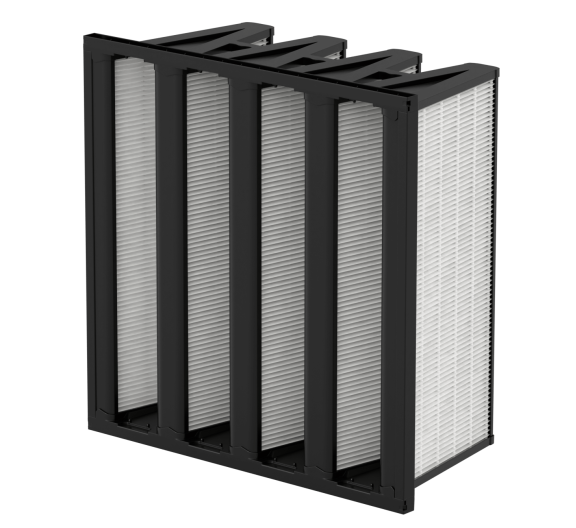
In this article, we compare two filters of the exact same class (ePM1 60% 4V, 592x592x292 mm). One utilizes standard fiberglass media, while the other features our new progressive synthetic filter media.
Mechanical Resilience and System Integrity
A critical factor in HVAC maintenance is the physical vulnerability of the filter media. Fiberglass consists of brittle mineral fibers held together by chemical binders. These fibers are sensitive to point-force pressure; a simple puncture from a tool or a finger during installation can fracture the media, creating a bypass that immediately compromises efficiency and airtightness of the ventilation system.
Pro-Tip: Installation Resilience
Fiberglass filters are fragile. Progressive synthetic media is far more forgiving, significantly reducing installation waste.
In contrast, progressive synthetic media is engineered from flexible, continuous polymer fibers. These fibers are elastic and highly resistant to tearing. This mechanical integrity ensures the filter remains a 100% effective barrier throughout its entire service life.
Air Permeability and Pressure Drop
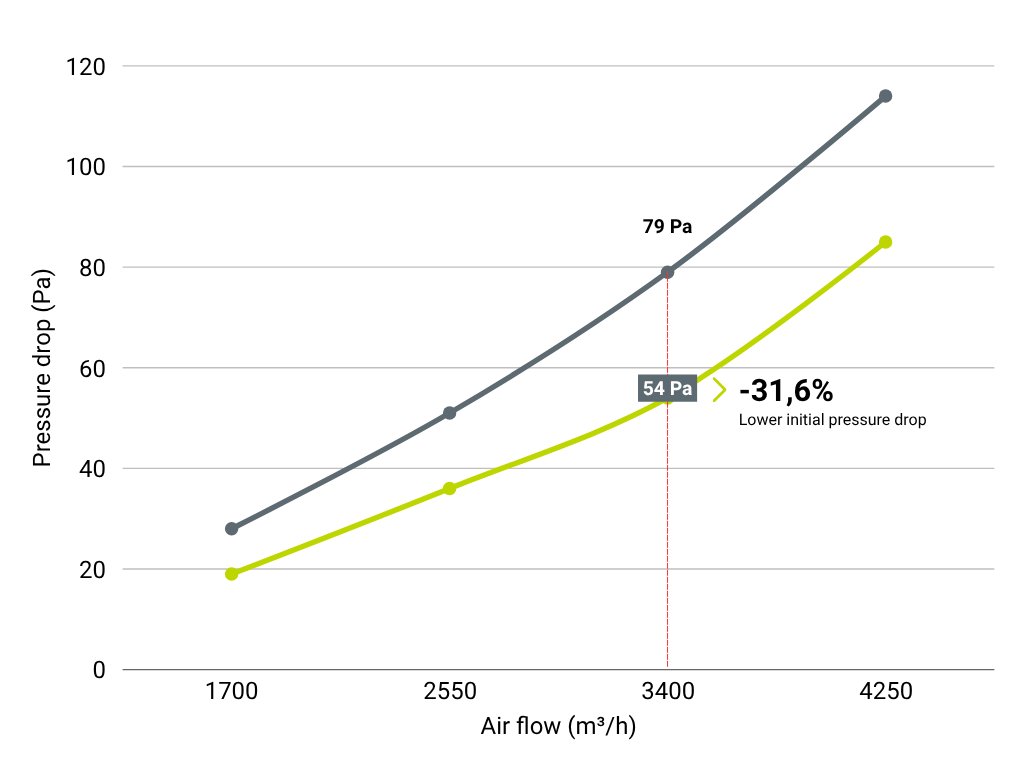
Fig 1: Differential Pressure (Pa) vs Airflow Rate.
While fiberglass was long considered the benchmark for low airflow resistance, the emergence of progressive synthetic media has redefined these performance limits. As illustrated in the differential pressure data (Fig 1), modern synthetic technology now consistently achieves higher air permeability within the exact same efficiency classes. At a nominal airflow of 3400 m³/h, standard fiberglass generates an initial resistance of 79 Pa, whereas the YGLA progressive synthetic filter operates at just 54 Pa under identical conditions.
This translates directly to a 31.6% lower initial pressure drop, achieved through precisely engineered structural gradients within the synthetic polymer fibers that allow air to pass with significantly less turbulence. For facility managers, this means the HVAC system’s blower motors encounter substantially less resistance from day one, minimizing mechanical strain and preventing premature wear.
Energy Consumption
A lower initial pressure drop translates directly into immediate and measurable energy savings. As shown in the comparative data (Fig 2), a standard fiberglass filter consumes approximately 1,056 kWh annually. By contrast, the YGLA progressive synthetic filter reduces this to just 838 kWh/a—successfully dropping the energy footprint below the rigorous Eurovent ePM 1 60 A+ threshold of 850 kWh/y and significantly reducing the electrical load on HVAC fan motors.
This 20.6% annual energy reduction is further supported by the media’s superior dust holding capacity. Progressive synthetic fibers are engineered with a graduated density structure to distribute particulate matter evenly throughout the filter's depth. This multi-layered architecture extends the functional lifecycle of the filter and flattens the energy consumption curve by avoiding the sharp resistance spikes typically caused by premature dust loading.
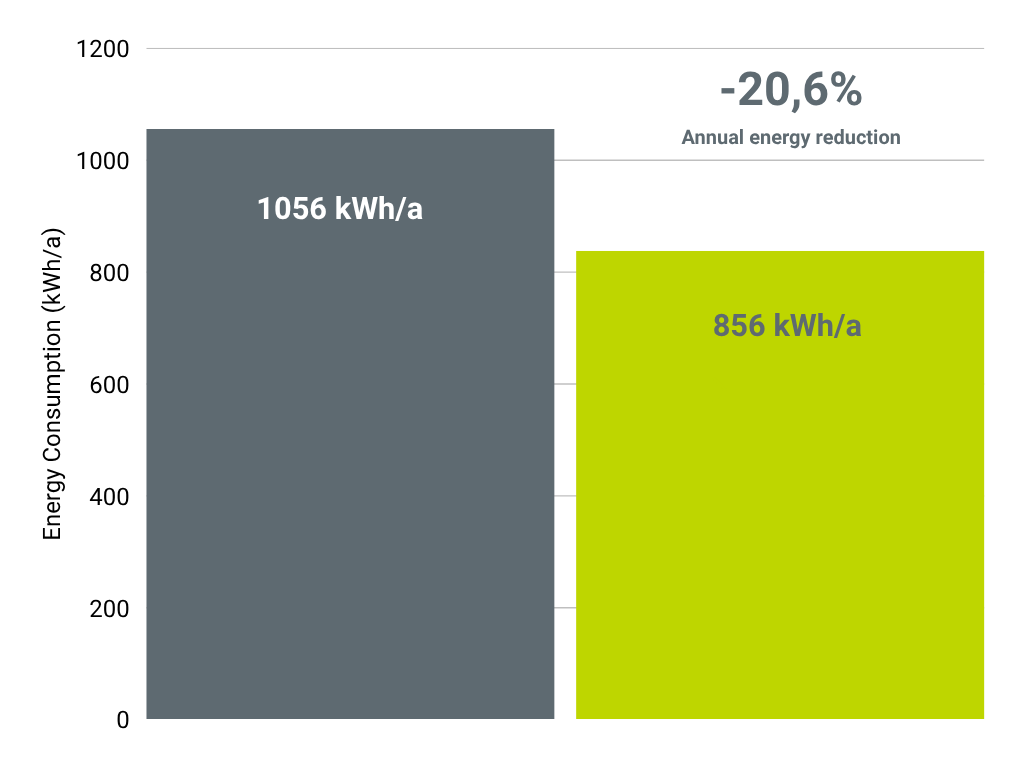
Fig 2: Annual Energy Consumption (kWh/a).
Moisture Resistance
Pro-Tip: Humidity Defense
For installations in high-moisture zones, utilizing hygienic hydrophobic media is the first step toward system longevity. To maximize these benefits, we recommend pairing progressive synthetic filters with rigid plastic or composite frames. This configuration provides exceptional structural stability and ensures a fully moisture-resistant filtration path without the risks associated with moisture-absorbent materials.
HVAC systems frequently operate in environments where moisture management is a technical priority. While traditional media remains a reliable standard for most controlled climates, progressive synthetic polymers offer a distinct advantage through their hygienic hydrophobic properties.
Because these synthetic fibers are naturally water-repellent, the media does not absorb moisture or provide the damp conditions required for microbial colonization. This ensures that the filter maintains its absolute structural integrity and high hygiene standards even in conditions with significant condensation. By resisting moisture-related degradation, the filtration unit remains a clean, effective barrier throughout its entire service life.
Chemical Safety and Sustainability
Fiberglass Disposal
Non-recoverable waste. Produced at ~1200°C. Remains as inert slag after incineration with no heat recovery.
Synthetic Disposal
Energy-recoverable. Produced at 200°C–300°C. Burns cleanly, generating recoverable heat for a circular economy.
Progressive Synthetic Solutions
Upgrade your system efficiency
Start saving on energy costs today with a custom technical assessment.
Get Offer
